
 EN
EN
How to Use Tianjin ENAK Automatic Packaging Line for Comprehensive Optimization of Packaging Processes?
In the cosmetics industry, the final packaging stage plays a decisive role in protecting fragile products, presenting the brand image, and controlling overall production costs. Many factories still rely on manual or semi-automatic case packing, which often leads to unstable efficiency, bottle tipping, and high labor intensity. Upgrading to an automatic packaging line with a full automatic case packer allows cosmetics manufacturers to turn a fragmented packaging process into a stable, coordinated system that supports long-term growth in a competitive market.
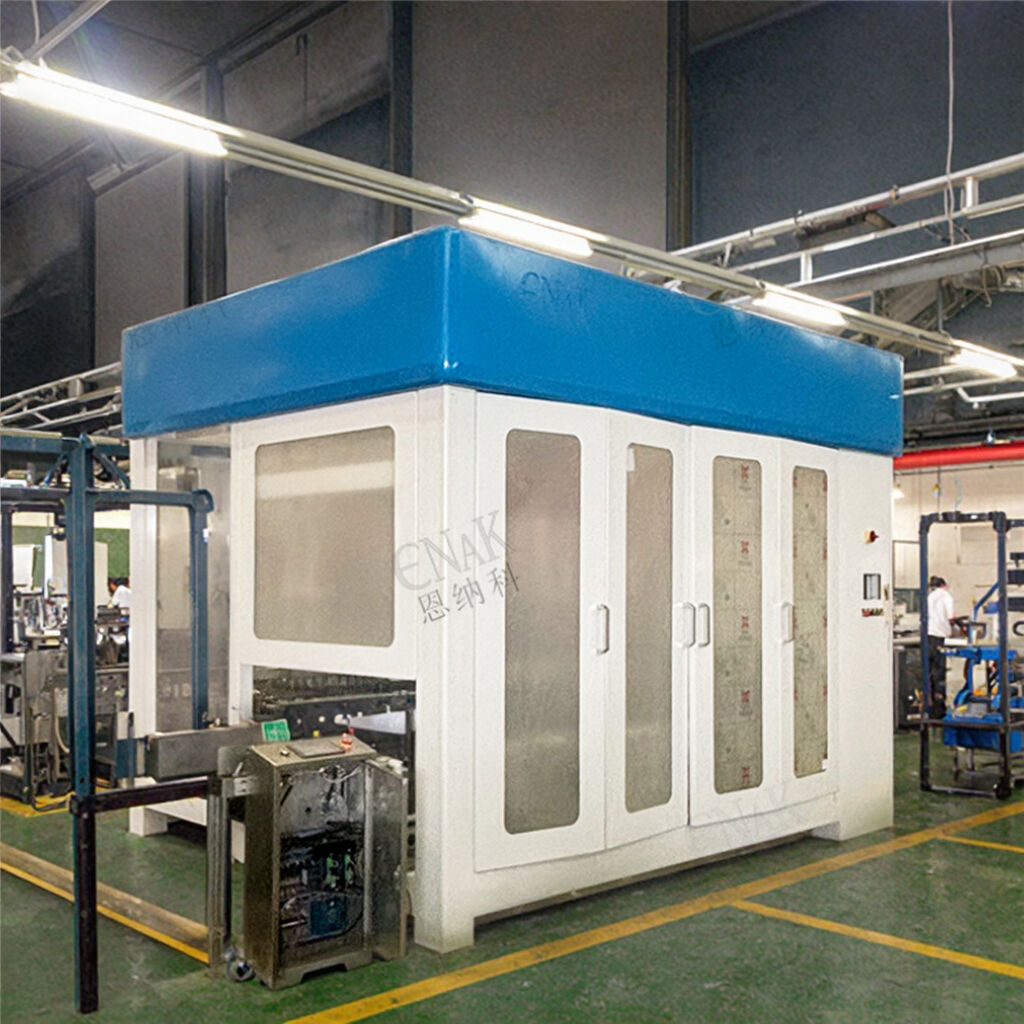
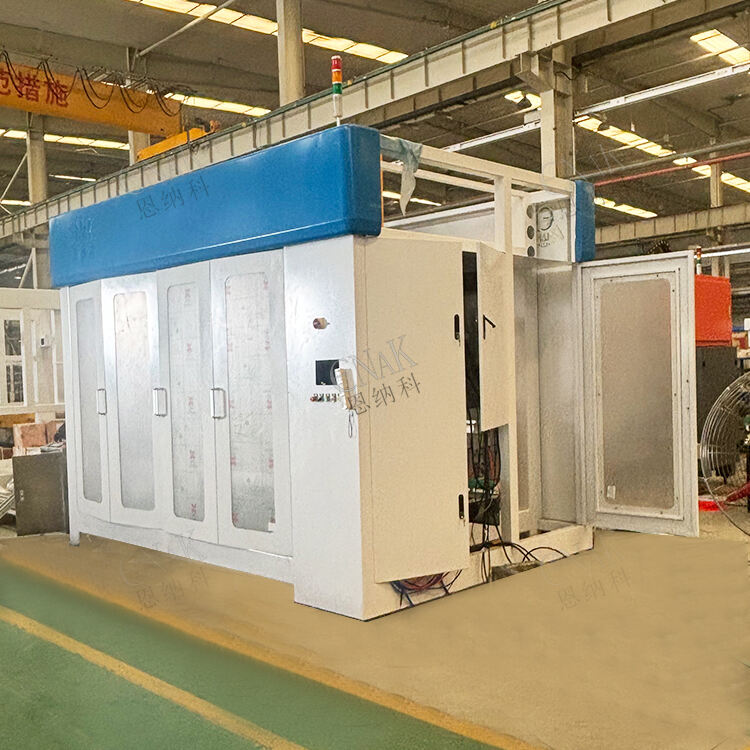
The Full Automatic Case Packer for Cosmetics production line from Tianjin ENAK is designed exactly for this scenario. It is a pneumatic and electric dual‑mode automatic packing machine with a compact structure and servo drive, developed after absorbing advanced foreign technology and combining it with local project experience. With about 5 kW power consumption and a structure adapted to refined cosmetics production, this automatic case packer reduces manual intervention, improves packing efficiency, and helps manufacturers in China and other regions build a more intelligent automatic packaging line.
 |
 |
Transforming Traditional Packing into an Integrated Automatic Packaging Line
In many cosmetics workshops, even when filling and labeling are automated, the case packing process may still depend on multiple workers manually grouping bottles and placing them into cartons. This approach creates common issues: inconsistent packing patterns, fatigue‑related errors, higher bottle breakage risk, and difficulty tracking real production speed. An automatic packaging line aims to connect the bottle conveyor, bottle divider, case packer, and carton outfeed into a coordinated system that performs these steps automatically and repeatably.
The Full Automatic Case Packer for Cosmetics production line from Tianjin ENAK is designed as a key element in such a line. Bottles coming from upstream machines are transferred to the bottle collection area, arranged into columns, gripped by customized bottle grippers, and placed into stationary cartons. New empty cartons are supplied as soon as packing is completed, ensuring continuous operation. The combination of pneumatic components and an electric servo drive enables smooth motion curves, stable gripping, and accurate placement without shaking. This supports a more refined automatic packaging line suitable for high‑value products such as liquid foundation, skincare, and makeup.
Core Architecture of the ENAK Automatic Case Packer in a Cosmetics Line
Tianjin ENAK designed the Full Automatic Case Packer for Cosmetics production line with a compact and elegant mechanical structure to fit into typical cosmetics workshops where space is carefully planned. The equipment uses a pneumatic and electric dual‑mode design: pneumatic components provide flexible gripping and buffering, while servo and asynchronous motors drive conveyors and bottle grippers with repeatable precision.
The bottle and carton conveyors are driven by asynchronous motors. With the cooperation of frequency converters and contactors, the machine automatically accomplishes bottle feeding, arranging, carton feeding, and carton discharging. During the packing process, the carton remains stationary while the bottle grippers move bottles into it. This method reduces mechanical impact on both bottles and cartons, lowering the chance of product damage.
Energy consumption is around 5 kW during operation, which is relatively low for a full automatic case packer of this type. For cosmetics manufacturers in the competitive global market, lower energy consumption contributes to reduced operating cost without sacrificing performance.
Customized Bottle Grippers Designed for Different Cosmetic Products
Cosmetic bottles come in many shapes and sizes: long and slender lipstick tubes, square or rectangular foundation bottles, cylindrical toner bottles, and compact cream jars. A single fixed‑design gripper cannot handle all of these safely. Tianjin ENAK addresses this by offering customized bottle grippers for the Full Automatic Case Packer for Cosmetics production line.
The bottle grippers can be designed as exclusive gripping mechanisms according to the shape of specific cosmetic bottles. Two sets of bottle grippers can grasp a specified number of bottles at the same time, and the distance between them is flexibly adjusted by air cylinders. This allows the same automatic packing machine to handle different bottle types with stable gripping force and accurate positioning.
For example, when the line switches from a liquid foundation bottle to a shorter cream jar, the operator can adjust the gripping parameters and spacing through the control interface, while the customized gripper shape ensures a secure hold. This improves the utilization of the automatic packaging line, reduces the need for separate dedicated machines, and supports more frequent product changes that are common in cosmetics manufacturing.
Four-Level Pressure Reduction Protection to Prevent Bottle Tipping
One of the unique technical features of this automatic case packer is its four-level pressure reduction design for bottle transportation. Cosmetics bottles are often slender and tall, or made of glass with decorated labels, making them sensitive to collisions and sudden stops. To protect these products, Tianjin ENAK implemented multiple pressure reduction stages along the bottle path.
The first level of pressure reduction is achieved by the speed difference between the bottle feeding conveyor and the front conveyor. This avoids bottle stacking and excessive collision at the transition point. The second level uses a pneumatic bottle stop device to reduce the impact force when bottles are being controlled for entry into the collection area. At the conveyor end, a cylinder applies two additional levels of pressure reduction, buffering speed and further stabilizing the bottle flow.
With these four stages working together, the pressure on bottles during transport is significantly reduced. The alignment error between the bottle gripper and the bottle is controlled within approximately 0.3 mm, and when bottles enter the packing area, they are in a nearly pressure‑free, stable state. Under these conditions, the bottle tipping rate can be controlled below about 0.1%, which protects the cosmetic bottle body and its label and helps avoid losses and rework caused by tipping or damage.
PLC and Frequency Conversion Control for Coordinated Smart Operation
To support the role of this equipment in an automatic packaging line, the Full Automatic Case Packer for Cosmetics production line uses a PLC programmable logic controller combined with frequency conversion control. The PLC coordinates the entire process of bottle sorting, gripping, and packing by receiving signals from sensors and actuators in real time.
Frequency converters control the speed of the conveyors to match different bottle specifications and packing patterns. For slender lipstick tubes, the conveyor speed and bottle spacing can be tuned to prevent vibration and clustering; for shorter cream jars, parameters can be adjusted to maintain stable transfer. All of these adjustments are made through software by modifying parameters on the touchscreen, without needing to mechanically replace components.
The PLC also supports diagnostic functions and can provide early warning when parameters in the frequency converter or other parts deviate from expected ranges. This helps maintenance teams detect potential faults earlier, plan interventions more efficiently, and keep the automatic packaging line running with fewer unexpected stops.
Visualized Human-Machine Interface for Faster Troubleshooting
Complex packaging equipment is only valuable when it is easy to operate and maintain. Tianjin ENAK equips this automatic case packer with an open touchscreen human‑machine interface that supports intuitive interaction between operators and the machine.
On the main display, the equipment shows the cosmetic case packing speed in units such as cartons per minute. This gives production managers a clear, real‑time view of line performance and supports production planning. When the equipment encounters issues such as bottle jamming or carton shortage, the interface can display fault codes and descriptions, for example marking a “pneumatic bottle stop fault” or pointing to the “conveyor end cylinder” area. Operators can follow these prompts to check specific components, which reduces dependence on specialized technicians and shortens the time needed to locate problems.
By visualizing both operating data and fault information, the human‑machine interface increases the automation degree of the system and helps keep productivity loss due to downtime under better control. This is particularly important in automatic packaging line setups, where a single stoppage can affect multiple connected machines.
Practical Operation Flow Embedded into Daily Production
The value of an automatic packaging line depends on how smoothly it integrates into daily production routines. Tianjin ENAK’s Full Automatic Case Packer for Cosmetics production line offers a clear operation flow that can be incorporated into shift schedules.
Before startup, operators check the machine appearance, ensure the safety doors are closed, verify that the bottle grippers are undamaged, and connect the three‑phase 380 V power supply and 0.6–0.8 MPa compressed air. Using the touchscreen, they enter the parameter setting interface and input the number of bottles per grip, conveyor speed, bottle dimensions, and carton size. Then, they run a self‑inspection function. The system automatically checks the status of each component and switches to standby mode after passing the inspection.
During operation, empty cartons are loaded into the carton feeding mechanism and cosmetic bottles are loaded onto the bottle feeding conveyor. By pressing the “Auto Run” command on the touchscreen, the automatic case packer begins its cycle: the bottle feeding conveyor delivers bottles to the collection area, the bottle divider arranges them into columns and moves them to the gripping position, the bottle grippers grasp the bottles and place them into a stationary carton, and a new carton is supplied when packing finishes. Throughout this process, production speed and machine status can be viewed in real time on the touchscreen, and the operator can use an emergency stop button if an abnormal situation is observed.
At the end of a production task, the operator clicks “Stop,” waits for the equipment to reset, and then disconnects the power supply and air source. The bottle grippers and conveyors are wiped with a lint‑free cloth to remove any stains from cosmetic bottles; if oil is present, a neutral detergent is used. The wear of silicone pads on the bottle grippers is checked and pads are replaced as needed. Finally, the operator records the daily production quantity and machine status to support the next startup.
This structured procedure helps cosmetics manufacturers use the automatic packaging line more consistently, maintain hygiene, and build a reliable maintenance record.
Comprehensive Optimization of Labor, Quality, and Cost
By integrating the Full Automatic Case Packer for Cosmetics production line into an automatic packaging line, cosmetics manufacturers gain a combination of labor savings, quality improvement, and cost control.
On the labor side, repetitive tasks such as manual grouping and case loading are replaced by automatic functions. Operators focus more on monitoring and parameter adjustment rather than manual lifting and arranging, which improves the working environment and reduces fatigue. The human‑machine interface and fault guidance features lower the skill threshold needed for basic operation and troubleshooting.
In terms of quality, the four‑level pressure reduction design, customized bottle grippers, and stable servo‑driven motion reduce bottle tipping, collision, and label damage. Bottles enter cartons in a stable state, and the bottle tipping rate is controlled to a low level, which reduces rework and waste. For cosmetics products where packaging appearance significantly influences consumer perception, this contributes to a more consistent high‑quality impression.
Cost control is achieved through a combination of reduced product damage, lower manual labor requirements, and energy consumption around 5 kW during operation. Although an automatic packaging line requires an initial equipment investment, the long‑term benefits in reduced waste, more stable throughput, and better resource utilization can help manufacturers achieve a favorable balance between price and performance.
Tianjin ENAK as a Reliable Automation Equipment Manufacturer
Tianjin ENAK was established in 2012 as a specialized high‑tech enterprise focusing on turnkey projects for pre‑made meal production lines, canned food production lines, and back‑end packaging production lines. The company integrates research and development, design, manufacturing, sales, and after‑sales service, and has accumulated significant influence in the packaging and food processing equipment fields.
Its product range covers deep learning inspection systems for raw material sorting, foreign object detection and coding inspection, canned food production equipment such as empty can depalletizers, bottle washers, peelers, splitting machines, can fillers, sterilizers, and conveying equipment, as well as packaging machines including self‑adhesive, paste, and hot‑melt glue labeling machines, case unpackers, case packers, case sealers, palletizers, and depalletizers. The Full Automatic Case Packer for Cosmetics production line is one example of how Tianjin ENAK applies this broad technical background to meet specific industry needs.
With a senior engineer team and more than ten years of customization experience, Tianjin ENAK can design and manufacture solutions adapted to the detailed requirements of manufacturers in the cosmetics and food industries. The company’s cultural philosophy emphasizes gathering talent and promoting technology to benefit customers, while its values highlight customer focus, entrepreneurial innovation, integrity, and dedicated effort. For cosmetics producers and other manufacturers looking for high‑quality automatic packaging line solutions from a reliable China manufacturer, Tianjin ENAK provides both equipment and technical support that align with long‑term production goals.
