
 EN
EN
How Does Tianjin ENAK Automatic Packaging Line Help Manufacturers Reduce Operational Costs and Boost Efficiency?
In competitive manufacturing industries like food, beverages, daily chemicals, and pharmaceuticals, the packaging process often represents both a significant expense and a potential bottleneck. Manual case packing requires multiple workers, increases the risk of product damage, and creates inconsistent throughput that affects overall line performance. An automatic packaging line with a full automatic case packer changes this dynamic by coordinating bottle conveying, grouping, gripping, and carton loading into a seamless, repeatable process.
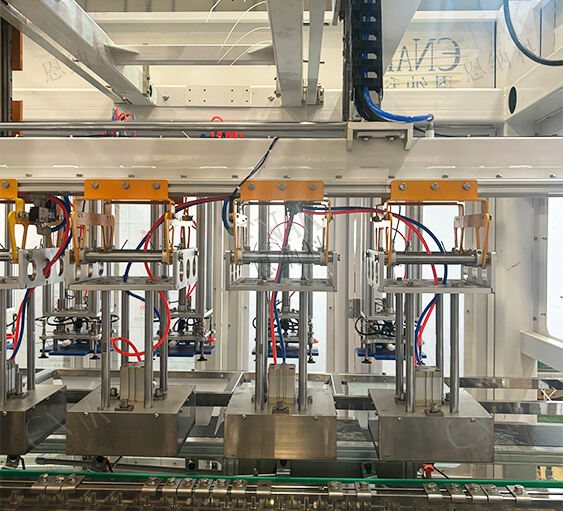
Tianjin ENAK's Production Line Full Automatic Case Packer stands out as a core component for such systems. This servo and PLC-controlled equipment uses special pneumatic components for product handling, achieving coordinated lifting, translation, and lowering motions through mechanical, pneumatic, electrical, and optical integration. With a system reliability of 99.5 percent and features like oil-free lubrication and pressure-free carton conveying, it directly addresses the operational costs that concern manufacturers most—labor, energy, maintenance, and product waste.
 |
 |
Servo Precision Control That Delivers Immediate Throughput Gains
Most manufacturers understand that speed alone doesn't guarantee efficiency in an automatic packaging line. What matters is maintaining stable performance across shifts while adapting to varying production demands. The Production Line Full Automatic Case Packer from Tianjin ENAK uses servo drive technology for its main transmission, paired with a German SIEMENS programmable controller known for fast communication and strong diagnostic capabilities.
This combination enables stepless speed regulation through a human-machine interface, allowing operators to match the case packing rhythm to upstream filling or labeling speeds. The system automatically adjusts packing speed based on the product feeding rate from the conveyor belt, preventing backups or idle time. For a beverage plant packing bottled water or a daily chemical facility handling shampoo bottles, this synchronization means higher overall line utilization without the need for constant manual intervention.
Reliability reaches 99.5 percent through integrated diagnostics that monitor component status in real time. When potential issues arise, the controller provides early warnings, helping maintenance teams address them before they cause downtime. In practical terms, this translates to fewer unexpected stops and more predictable production schedules, directly boosting efficiency for manufacturers focused on meeting delivery commitments.
Four-Level Pressure Reduction Engineering Minimizing Product Damage Costs
Product loss from tipping or collision during case packing can add up quickly, especially with glass bottles, tall PET containers, or soft packaging in food and pharmaceutical lines. Tianjin ENAK addresses this with a four-level pressure reduction design built into the Production Line Full Automatic Case Packer.
The first level uses speed differences between the bottle feeding conveyor and front conveyor to prevent stacking and initial collisions. A pneumatic bottle stop device provides the second level, further softening impact as bottles approach the grouping area. At the conveyor end, a cylinder delivers two additional stages of buffering to slow and stabilize the flow completely. The result is gripper-to-product alignment within 0.3 mm, with bottles entering the packing zone in a pressure-free state.
This engineering keeps the bottle tipping rate below 0.1 percent, even for easily upset containers like glass beverage bottles or pharmaceutical oral liquids. For manufacturers, the savings are clear: reduced rework, fewer damaged goods reaching quality control, and lower scrap rates that protect profit margins. In high-volume operations, avoiding even a 1 percent loss on thousands of units daily compounds into substantial annual cost reductions.
German Linear Positioning System Slashing Long-Term Maintenance Expenses
Maintenance costs often surprise manufacturers after the initial equipment purchase. Traditional positioning systems require regular lubrication, leading to oil contamination risks, frequent part replacements, and labor for upkeep. The Production Line Full Automatic Case Packer incorporates a German IGUS linear positioning system that changes this equation.
With positioning accuracy of ±0.1 mm and precise movement control, the IGUS components reduce vibration and impact during operation by 40 percent compared to conventional setups. This stability minimizes wear on grippers, conveyors, and other moving parts, while preventing product displacement that could cause packing errors.
The system's lubrication-free and maintenance-free design eliminates oil injection needs entirely, avoiding pollution in food and pharmaceutical environments. Service life extends three times longer than standard positioning mechanisms, which means fewer replacements and less scheduled downtime. For a typical automatic packaging line running two or three shifts, these factors cut annual maintenance budgets significantly, making the equipment a stronger long-term investment for cost-conscious producers.
Oil-Free Pneumatics and Strategic Materials Cutting Daily Operating Costs
Operational expenses extend beyond energy and maintenance to include lubrication, cleaning, and compliance efforts. Tianjin ENAK's full automatic case packer uses oil-free lubrication pneumatic components, with most moving parts designed for lifetime operation without oil injection. This eliminates recurring lubricant purchases and the labor associated with greasing schedules.
The machine body combines stainless steel for product-contact surfaces, aluminum alloy for the transmission structure, engineering plastics for protective shells, and spray-plated carbon steel for the frame. Stainless steel resists corrosion and cleans easily to meet food industry hygiene standards. Aluminum alloy keeps the structure lightweight yet strong, reducing overall equipment weight and energy draw. Spray plating on carbon steel enhances rust resistance for extended durability.
These material choices support low noise levels and zero oil pollution, simplifying daily sanitation routines. Multiple carton feeding options—manual, automatic, or continuous fast feeding—along with manual or automatic gripper operation, provide flexibility that matches different plant scales. Smaller footprints and larger operation spaces around the machine further optimize workshop layouts, helping manufacturers maximize floor efficiency without expanding facilities.
Integrated Safety Features Preventing Costly Production Interruptions
Unexpected downtime from safety incidents or fault propagation erodes efficiency gains from automation. The Production Line Full Automatic Case Packer includes multiple protection functions that automatically stop the machine when issues are detected, such as insufficient cartons on the feeding belt, low bottles on the conveying table, or gripper-carton misalignment.
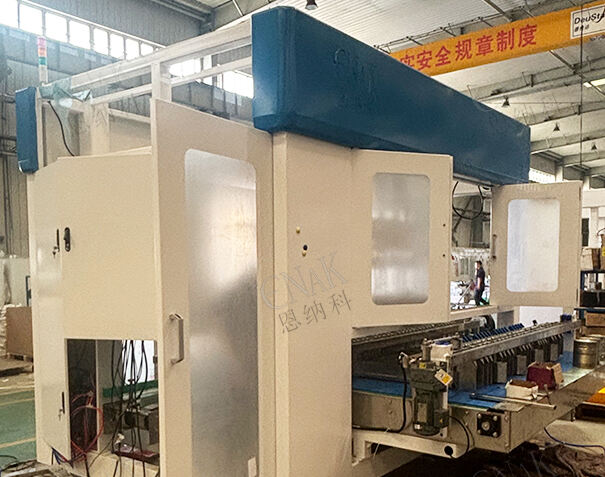
Fully enclosed safety guards and photoelectric sensors comply with national standard GB 12265.1-2007 for mechanical safety distances, eliminating risks of upper limb access to hazardous areas. These measures protect workers while preventing minor faults from cascading into major line stoppages. In an automatic packaging line where interconnected equipment amplifies disruptions, this proactive approach keeps production flowing and safeguards the investment in the overall system.
For manufacturers, reliable safety translates to consistent output, lower insurance premiums from reduced accident risks, and compliance that supports expansion into regulated markets like pharmaceuticals.
Versatile Applications Maximizing Return Across Multiple Industries
A single-purpose machine limits flexibility, but Tianjin ENAK's full automatic case packer supports diverse production scenarios, extending its value in an automatic packaging line.
In food and beverage lines, it handles case packing for bottled water (24 bottles of 550 ml per carton), fruit juice, canned foods, and dairy products. The oil-free design prevents contamination, while four-level pressure reduction stabilizes glass bottles and tin cans for large-scale hygienic production.
Daily chemical care lines benefit from packing shampoo, body wash, and laundry detergent (12 bottles of 750 ml per carton in multiple rows). The compact footprint suits tight workshop layouts, and precise gripping manages special-shaped flat or curved bottles without label wear.
Pharmaceutical and health product lines use it for glass oral liquid bottles and PE health product containers. The lubrication-free construction minimizes cleaning dead corners, and fault protections avoid product pollution in sterile environments. Automatic speed adjustment accommodates small-batch, multi-specification pharmaceutical rhythms.
By serving these sectors with seamless integration to filling, labeling, and downstream packing, the machine helps manufacturers spread equipment costs across more applications, accelerating payback periods.
Quantifying Labor Energy and Maintenance Savings in Real Operations
Manufacturers evaluate automatic packaging line investments based on tangible returns. The Production Line Full Automatic Case Packer delivers measurable improvements across key areas.
Labor savings come from replacing multiple manual packers with one automated system focused on monitoring. Operators handle parameter changes and basic upkeep rather than repetitive physical tasks, improving shift ergonomics and reducing turnover.
Energy use stays at about 5 kW during operation, lower than many comparable systems that draw 10-15 kW. Combined with stepless speed regulation that matches actual demand, this supports efficient power consumption without excess capacity.
Maintenance costs drop through oil-free pneumatics, the IGUS system's three-times longer life, and simpler material handling that cuts cleaning time. Product protection via 0.1 percent tipping rates versus 1-2 percent manual handling prevents material losses that accumulate rapidly in volume production.
For a medium-sized plant, these factors often yield payback within 12-18 months through combined labor, energy, maintenance, and waste reductions. High-quality construction from a reliable China manufacturer ensures the savings continue over years of service.
Tianjin ENAK Engineering Expertise Driving Cost-Effective Automation
Tianjin ENAK established in 2012 specializes in turnkey projects for pre-made meal production lines, canned food production lines, and back-end packaging production lines. The company integrates research and development, design, manufacturing, sales, and after-sales service with significant influence in the industry.
Its diverse product series includes deep learning inspection equipment for raw material sorting, foreign object detection, and coding inspection; canned food equipment like empty can depalletizers, bottle washers, peelers, splitting machines, can fillers, sterilizers, and conveyors; and packaging solutions such as self-adhesive, paste, and hot-melt glue labeling machines, case unpackers, case packers, case sealers, palletizers, and depalletizers.
Tianjin ENAK offers comprehensive design and manufacturing for complete production lines, providing one-stop solutions. With a senior engineer team and over ten years of customization experience, the company supports manufacturers seeking high-quality automatic packaging line equipment at competitive prices with reliable after-sales service.
Guided by values of customer first, entrepreneurial innovation, integrity, and joyful striving, Tianjin ENAK advances intelligent back-end packaging to realize smart manufacturing in pre-made meal and canned food industries.
