Why choose Belt Conveyor Machine for your factory line?

All Categories

High-Performance Belt Conveyor Machine for Industrial Material Handling

The Belt Conveyor Machine is a core solution for industrial material transport, designed to automate continuous movement of cartons, bottles, bags, and bulk items. From a B2B supplier perspective, the Belt Conveyor Machine reduces labor costs, ensures consistent production flow, and improves operational efficiency. With modular belts, adjustable speeds, and flexible layout options—including inclines, curves, and multi-level transport—the Belt Conveyor Machine adapts to diverse production environments. Built for durability, low noise, and long service life, it integrates seamlessly with upstream and downstream machines like fillers, labelers, case packers, and palletizers. Optional automation features such as sensors, remote diagnostics, and accumulation systems increase throughput while maintaining safety and reducing downtime.
Get A Quote

Belt Conveyor Machine

Adopting a Belt Conveyor Machine provides measurable benefits in efficiency, safety, and scalability. The Belt Conveyor Machine ensures smooth, continuous material flow, reducing stoppages and manual handling errors. Its modular construction and flexible configuration allow easy integration into existing production lines and rapid adaptation to new product SKUs. Durable components, energy-efficient drives, and automated monitoring reduce maintenance costs while maximizing uptime. From a B2B perspective, selecting a reliable Belt Conveyor Machine supplier ensures consistent throughput, improved product integrity, and a high return on investment.

Consistent, High-Speed Material Transport Across Production Lines

The Belt Conveyor Machine provides steady, precise movement of materials with adjustable speed settings to match production line demands. High-quality belts and rollers prevent product slippage and minimize vibrations, ensuring cartons, bottles, and bulk items are transported reliably. Smooth, continuous operation reduces product damage and downtime, supporting higher throughput. Operators benefit from predictable production rhythms, while quality teams maintain compliance with packaging and handling standards. The Belt Conveyor Machine's repeatable performance ensures efficiency and consistency across multiple shifts.

Modular Design for Flexible Layouts and Scalable Integration

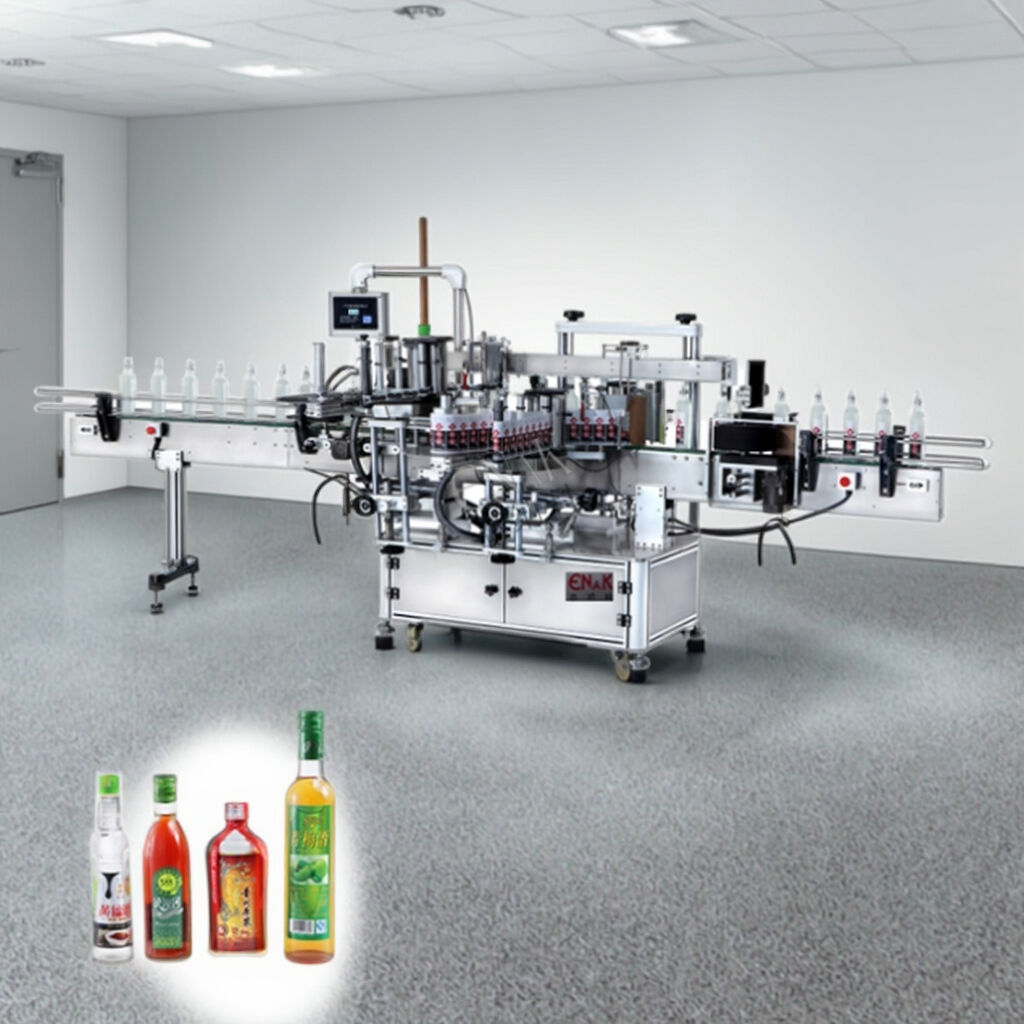
With modular belts, frames, and accessories, the Belt Conveyor Machine can be configured in straight runs, curves, or multi-level layouts. Integration with fillers, labelers, and case packers is simplified through standardized I/O connections and PLC controls. Optional accumulation, sorting, and incline modules allow the Belt Conveyor Machine to adapt to complex workflows. For B2B operators, this flexibility reduces installation time, enables quick line reconfiguration, and ensures that production capacity can scale with business growth without costly redesigns.

Durable, Low-Maintenance Components Ensure Long-Term ROI

The Belt Conveyor Machine is engineered with high-quality motors, reinforced frames, and wear-resistant belts to handle heavy loads and continuous operation. Easy access to rollers, pulleys, and drive components simplifies maintenance, minimizing downtime. Energy-efficient drives and reduced noise operation improve the work environment while lowering operational costs. For B2B customers, the Belt Conveyor Machine offers reliable performance, long service life, and minimal total cost of ownership, ensuring a fast return on investment and consistent productivity.

Related Products

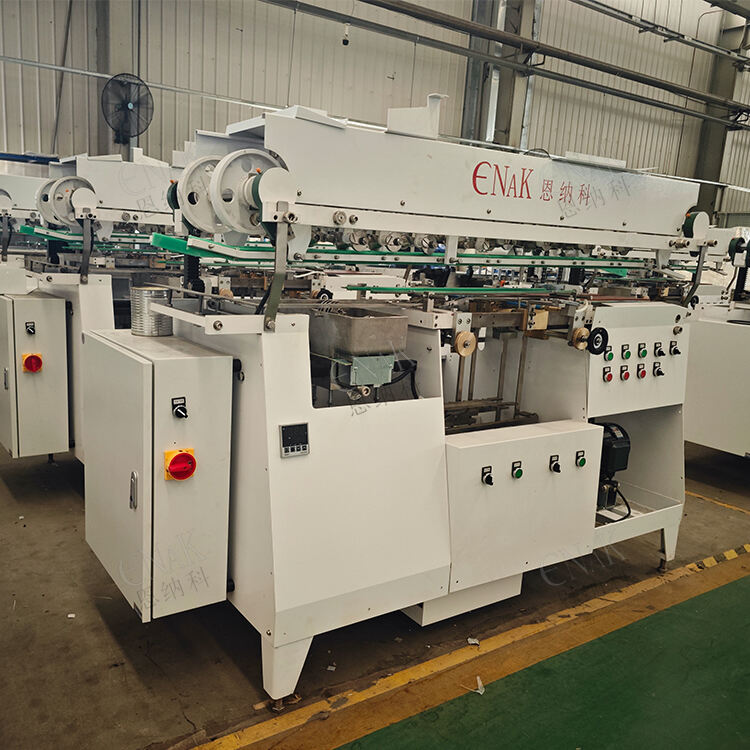
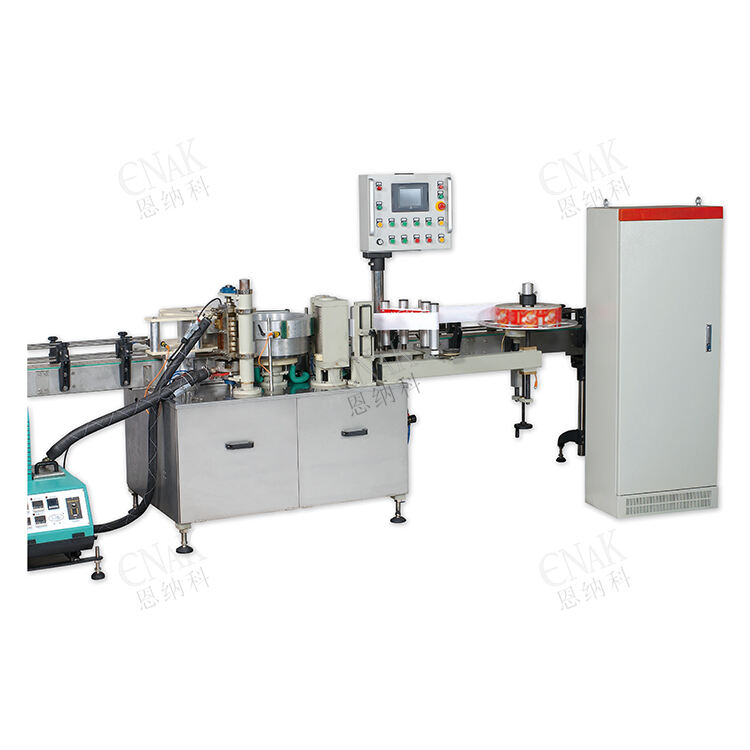
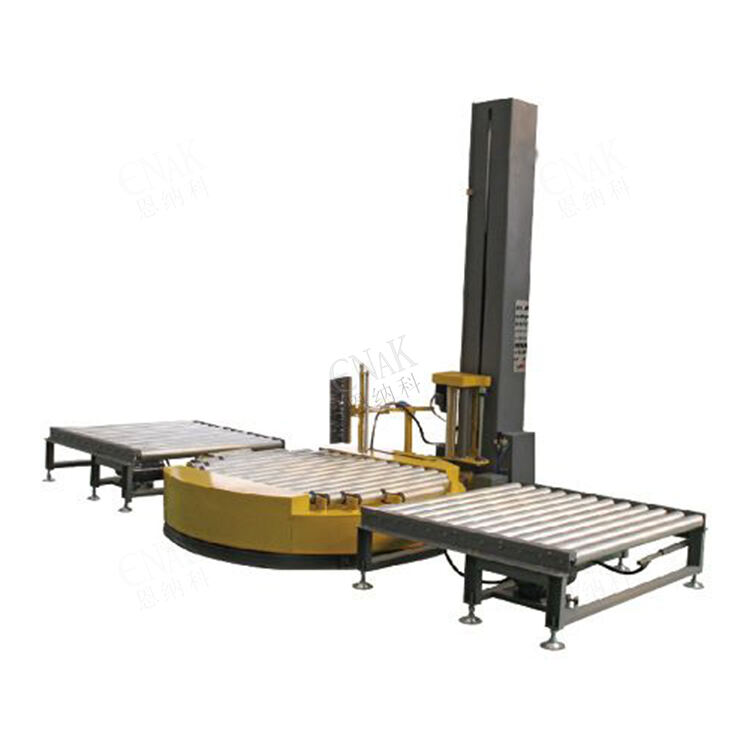
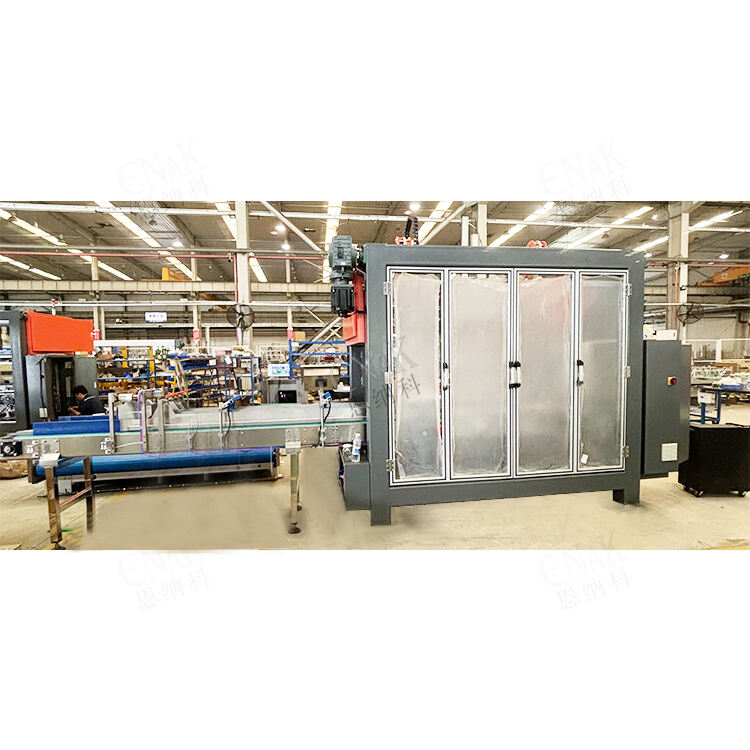
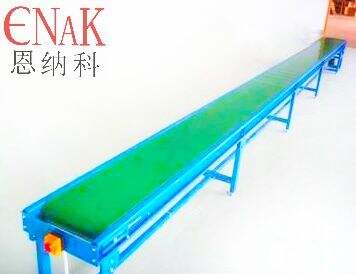
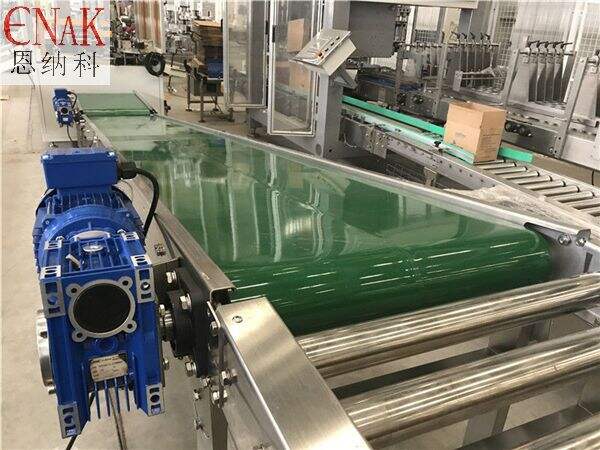
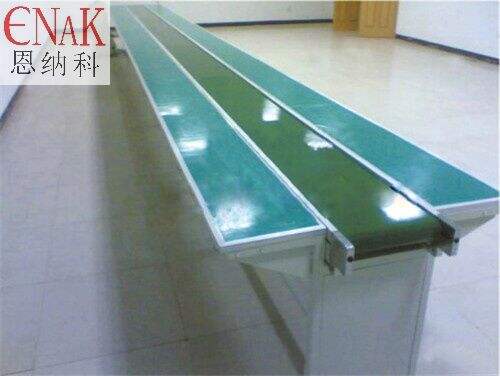
The Belt Conveyor Machine features a robust steel frame, energy-efficient motors, modular belt systems, and adjustable speed controls. Designed for continuous industrial operation, it supports horizontal, inclined, and multi-level transport of cartons, bottles, pallets, and bulk materials. Integration with upstream and downstream equipment such as fillers, case packers, labelers, and palletizers is seamless via standard I/O or networked protocols. Optional features include sensors for jam detection, accumulation modules, and remote monitoring via PLC/HMI. Durable components, low noise, and minimal maintenance requirements make the Belt Conveyor Machine ideal for high-volume, automated production environments. ENAK provides customizable configurations to match factory layouts and production demands.

Tianjin ENAK, founded in 2012, is a modern high-tech enterprise specializing in turnkey projects for pre-made meal production lines, canned food lines, and back-end packaging lines. ENAK integrates R&D, engineering design, manufacturing, sales, and after-sales support to deliver end-to-end solutions for industrial clients worldwide. The company’s portfolio includes conveyor equipment, filling machines, labeling systems, carton handling solutions, case packers, case sealers, palletizers, depalletizers, and inspection systems.

For conveyor solutions, ENAK provides Belt Conveyor Machines, Automated Conveyors, Chain Conveyors, and specialized material handling systems, designed for continuous operation, modular installation, and flexible integration with production lines. ENAK engineers assess line layouts, material characteristics, and throughput requirements to recommend optimal conveyor configurations. Detailed planning, FAT/SAT testing, and on-site commissioning ensure that ENAK conveyors meet production KPIs and deliver maximum reliability.

ENAK emphasizes durability, low maintenance, and energy efficiency across all conveyor systems. Modular components, accessible service points, and integrated PLC/HMI diagnostics simplify maintenance while extending equipment life. Conveyor systems are compatible with accumulation, sorting, incline, and multi-level transport requirements. The company also supports custom tooling, OEM branding, and automation integration, enabling tailored solutions for complex workflows.

Clients benefit from ENAK’s global experience, after-sales support, training programs, and spare-part availability. ENAK’s conveyors are deployed across food, beverage, pharmaceutical, electronics, and logistics industries, demonstrating versatility, high throughput, and operational reliability. By focusing on automation, intelligent monitoring, and continuous improvement, ENAK helps industrial operators achieve higher efficiency, lower operational costs, and safe, consistent material handling performance.


FAQ

What is the typical load capacity and speed of a Belt Conveyor Machine?

The Belt Conveyor Machine can handle a wide range of loads, typically from light cartons and bottles up to heavy pallets or bulk materials. Load capacity depends on belt width, motor power, and roller specifications. Standard models support speeds from 0.1 to 2 meters per second, adjustable via frequency inverter or PLC settings. High-capacity variants can transport larger volumes continuously. Reliability is enhanced with reinforced frames, wear-resistant belts, and regular preventive maintenance. Integration with upstream and downstream machines ensures synchronized operation, reducing product damage and minimizing line stoppages. Optional accumulation and speed-regulation modules allow smooth handling for mixed-product workflows.
Belt Conveyor Machines are highly flexible, featuring modular frames, adjustable belt widths, and configurable roller spacing. Straight runs, curves, inclines, and multi-level layouts can be combined to fit complex factory designs. HMI-controlled belt speed, servo-driven adjustments, and interchangeable belt types allow rapid adaptation to different product sizes, shapes, and weights. Optional sensors, sorting devices, and accumulation zones support diverse materials and packaging lines. For B2B operations, this adaptability reduces installation time, minimizes downtime during format changes, and supports scalability as production volumes or product assortments change.
Standard maintenance features include easy-access rollers, pulleys, belts, and drives to simplify inspection and replacement. Sensors detect jams, belt misalignment, and overloading to prevent damage. Safety measures include emergency stop switches, guarding with interlocks, and clear access panels. HMI diagnostics provide guided troubleshooting, reducing mean time to repair. Routine maintenance involves lubrication, belt tension adjustments, and sensor calibration. ENAK’s Belt Conveyor Machines also offer optional remote monitoring and preventive maintenance alerts. Combined, these features ensure continuous, safe operation with minimal downtime and prolonged equipment life.

More Posts

How Does Industrial Bottle Washing Machine Support High-Efficiency Cleaning for Large Production Lines?

10

Oct

How Does Industrial Bottle Washing Machine Support High-Efficiency Cleaning for Large Production Lines?

Project Requirements When managing large-scale production lines in the food and beverage sector, ensuring both speed and hygiene is an ongoing challenge. Bottles must be thoroughly cleaned before filling to eliminate contaminants, residues, or microo...
View More
How to Achieve Efficient and Hygienic Production with Tianjin ENAK Beer Canning System?

10

Oct

How to Achieve Efficient and Hygienic Production with Tianjin ENAK Beer Canning System?

Product Background In the global brewing industry, efficiency and hygiene have become two inseparable goals. With consumer expectations rising, breweries cannot afford to compromise on either production speed or beverage quality. The introduction of ...
View More
What Are the Advantages of Tianjin ENAK Automatic Carton Sealing Machine in the Chinese Market?

10

Oct

What Are the Advantages of Tianjin ENAK Automatic Carton Sealing Machine in the Chinese Market?

Product Advantage Technical Background In the competitive packaging industry, manufacturers continuously face the challenge of balancing production efficiency, cost control, and product quality. Among all packaging equipment, carton sealing is a crit...
View More
How Does Tianjin ENAK Hot Melt Glue Labeling Machine Achieve Efficient and Diverse Packaging Labeling?

10

Oct

How Does Tianjin ENAK Hot Melt Glue Labeling Machine Achieve Efficient and Diverse Packaging Labeling?

Industry Demand In today’s competitive packaging and manufacturing sector, product presentation and labeling accuracy are crucial for brand recognition and regulatory compliance. Modern manufacturers face increasing pressure to improve labeling...
View More

Customer Reviews

Review 1 — John Peterson (Operations Supervisor)

“Our beverage line needed continuous, reliable transport for bottles and cartons. The Belt Conveyor Machine from ENAK dramatically improved flow and reduced manual handling. Its modular design allowed us to incorporate curves and inclines in our facility layout without any compromise on speed or stability. Integration with our case packers and labelers was seamless, thanks to PLC connectivity. Over months of operation, belt wear has been minimal, and maintenance is straightforward with clear access points. Safety features and sensors have minimized jams and prevented downtime. Overall, the Belt Conveyor Machine delivered measurable ROI through labor savings and enhanced throughput.”

Review 2 — Maria Lopez (Plant Manager)

“We implemented ENAK’s Belt Conveyor Machine for multi-product packaging lines in our food facility. The machine supports different carton sizes and weights with minimal adjustment time using HMI-stored presets. Accumulation modules and incline sections enabled smoother transfer between production stages. Maintenance is simplified due to accessible components and diagnostic screens. Operators appreciate the quiet operation and the consistent, reliable performance. The Belt Conveyor Machine allowed us to expand our line efficiency and throughput while maintaining product integrity, making it a critical asset for our B2B production environment.”

Review 3 — Kevin Zhang (Logistics Director)

“In our electronics packaging plant, the Belt Conveyor Machine improved throughput and minimized product handling errors. Modular sections allowed flexible routing through tight spaces, and speed adjustments ensured synchronization with upstream and downstream processes. Sensors detected jams early, preventing damage and reducing maintenance downtime. Over time, the machine has proven durable, energy-efficient, and easy to maintain. ENAK provided training and spare parts, ensuring continuous operation across multiple shifts. The Belt Conveyor Machine has become central to our automated production, increasing output consistency and overall efficiency.”

Get a Free Quote

Our representative will contact you soon.
Email
Name
Company Name
Message
0/1000
Flexible Modular Design Supports Complex Layouts and Multi-Level Conveyor Systems

Flexible Modular Design Supports Complex Layouts and Multi-Level Conveyor Systems

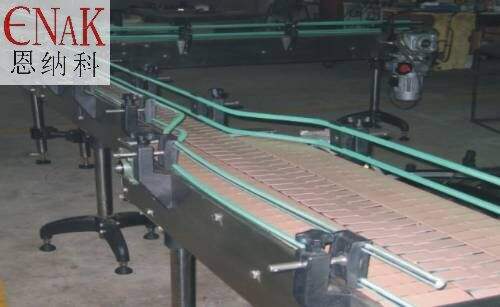
The Belt Conveyor Machine features modular frames and belt segments that allow straight, curved, inclined, or multi-level layouts. This flexibility enables customized material handling pathways and easy integration with existing production lines. The modular design also supports quick expansion or reconfiguration, helping manufacturers adapt to changing product types and facility layouts without major downtime.
Durable Construction and High-Quality Components Ensure Long-Term Reliability

Durable Construction and High-Quality Components Ensure Long-Term Reliability

Built with reinforced frames, wear-resistant belts, and energy-efficient motors, the Belt Conveyor Machine is designed for continuous industrial use. Accessible maintenance points and standardized components reduce downtime. The robust design ensures high reliability under heavy load conditions and long-term operation, making it a cost-effective solution for B2B production facilities.
Intelligent Control and Integration Capabilities Enhance Production Efficiency

Intelligent Control and Integration Capabilities Enhance Production Efficiency

Belt Conveyor Machines from ENAK integrate seamlessly with PLC/HMI control systems for real-time monitoring and adjustments. Optional features like sensors, accumulation zones, and remote diagnostics improve efficiency and safety. Automated coordination with upstream and downstream equipment allows precise synchronization, reduces manual intervention, and enhances overall line productivity.